
⚡ Quick Answer: What is Meningitis & Why Is It a Neurological Emergency?
Meningitis is an acute, life-threatening inflammation of the protective membranes (the meninges) that envelop the brain and spinal cord. It is primarily caused by bacterial or viral infections, though fungal and tubercular forms also occur.
The Emergency Rule: Bacterial meningitis can progress from mild flu-like symptoms to septic shock, permanent neurological damage, hearing loss, or death within 24 to 48 hours. The classic warning triad is sudden high fever, intractable headache, and a stiff neck. Immediate hospitalization and prompt antibiotic administration are critical to saving lives.
Every year on October 5th, global health organizations, medical institutions, and patient advocates unite to observe World Meningitis Day. Coordinated globally under the World Health Organization’s (WHO) ambitious initiative—Defeating Meningitis by 2030—this day serves as a critical rallying cry to eliminate meningitis epidemics, reduce cases and deaths, and improve aftercare for survivors.
As neurosurgeons, we witness firsthand how fast this disease strikes. A patient who felt slightly unwell in the morning can develop altered consciousness, seizures, or dangerous intracranial pressure by evening. On this World Meningitis Day, this comprehensive clinical guide authored by Dr. Vrushab Vinay Rode, Consultant Neurosurgeon at Alright Hospital Nagpur, outlines the early signs, pediatric red flags, neurosurgical complications, vaccination schedules, and emergency response protocols every family must know.
What Is Meningitis? Anatomy & Pathophysiology
To understand meningitis, one must look at the brain’s natural defensive armor. The central nervous system is enveloped by three specialized membranous layers known collectively as the meninges:
- Dura Mater: The tough, fibrous outermost membrane adhering directly to the inner skull surface.
- Arachnoid Mater: The delicate, web-like middle membrane cushioning the brain.
- Pia Mater: The fragile, vascular innermost layer that intimately hugs every contour and sulcus of the cerebral cortex and spinal cord.
The subarachnoid space between the arachnoid and pia mater contains circulating Cerebrospinal Fluid (CSF). When virulent pathogens breach the bloodstream or invade directly through anatomical defects (such as skull fractures, chronic sinusitis, or middle ear infections), they penetrate the blood-brain barrier and colonize the subarachnoid space.
The resulting immune response triggers intense purulent exudate, cellular swelling (cerebral edema), impaired CSF reabsorption, and sharply elevated Intracranial Pressure (ICP)—creating a critical neurosurgical emergency.
The Classic Warning Signs: Recognizing the Symptoms Early
Early recognition is the single most decisive factor in determining survival and long-term neurological recovery. While early symptoms often mimic common viral infections or seasonal flu, the speed and severity of deterioration are hallmarks of meningitis.
The Classic Diagnostic Triad
- Sudden High-Grade Fever: An abrupt, severe elevation in core body temperature, often accompanied by intense shivering and cold extremities.
- Severe, Throbbing Headache: Unlike an ordinary tension headache or migraine, this headache is relentless, incapacitating, and exacerbates with any head movement.
- Stiff Neck (Nuchal Rigidity): Inability to flex the chin down to touch the chest due to painful meningeal irritation and reflex spasm of the paraspinal neck musculature.
*Note: In clinical practice, fewer than 50% of adult patients present with all three signs simultaneously at onset. The presence of even two signs requires immediate emergency medical evaluation.
Additional Critical Warning Signs in Adults & Older Children
- Photophobia (Sensitivity to Light): Severe ocular discomfort or worsening headache upon looking at ambient light or bright screens.
- Altered Mental Status & Confusion: Disorientation regarding time, place, or identity; drowsiness; slurred speech; or delirium.
- Nausea and Projectile Vomiting: Caused by rapid surges in intracranial pressure stimulating the brainstem’s chemoreceptor trigger zone.
- Seizures (Fits/Convulsions): New-onset focal or generalized motor seizures arising from localized cortical irritation or vasculitis.
- Kernig’s Sign & Brudzinski’s Sign: Bedside neurological tests where attempting to extend the knee with the hip flexed causes severe hamstring pain (Kernig’s), or involuntary flexing of the hips/knees occurs when the neck is gently flexed forward (Brudzinski’s).
- Non-Blanching Petechial / Purpuric Rash: Tiny red or purple pinprick spots on the skin that do not fade when pressed firmly with a clear drinking glass (the Glass Tumbler Test). This is a hallmark of fulminant meningococcemia and requires instant ICU resuscitation.
⚠️ Meningitis in Infants and Young Children: Silent Red Flags
Infants and toddlers rarely complain of headaches or stiff necks. Instead, their clinical signs are subtle and easily missed by inexperienced observers. Parents must watch for:
- Bulging or Tense Fontanelle: A noticeably swollen, firm soft spot on top of the infant’s head when the child is calm and upright.
- High-Pitched, Inconsolable Screaming: A distinctive shrill, painful cry that does not resolve with rocking, feeding, or cradling.
- Paradoxical Irritability: The baby cries more intensely when held or touched, as movement irritates inflamed spinal nerve roots.
- Poor Feeding and Lethargy: Refusing breast milk or bottle feeds, vomiting repeatedly, or being difficult to wake up.
- Hypotonia (Floppiness): Lack of muscle tone, limp limbs, or an arched back with neck retracted backwards (opisthotonos).
Bacterial vs. Viral vs. Fungal Meningitis: Key Differences
The clinical course, urgency, and medical management vary drastically depending upon the causative organism. The comparison table below highlights the defining features:
| Parameter | Bacterial Meningitis | Viral (Aseptic) Meningitis | Tubercular (TBM) / Fungal |
|---|---|---|---|
| Common Causes | S. pneumoniae, N. meningitidis, H. influenzae, Listeria | Enteroviruses, HSV-2, Arboviruses, Mumps | Mycobacterium tuberculosis, Cryptococcus neoformans |
| Onset Speed | Fulminant (Hours to 1-2 Days) | Subacute (2 to 5 Days) | Insidious (Weeks to Months) |
| Severity & Risk | Extreme; high mortality & neurological sequelae without treatment | Usually self-limiting; lower mortality rate | High risk of hydrocephalus, cranial nerve palsies, stroke |
| CSF Findings | Cloudy/turbid, marked neutrophilic pleocytosis, low glucose, high protein | Clear CSF, lymphocytic pleocytosis, normal glucose, mild protein rise | Cobweb coagulum, marked lymphocytic count, very low glucose, very high protein |
| Treatment | Immediate IV Ceftriaxone + Vancomycin + Dexamethasone | Supportive care, IV Acyclovir (if HSV suspected), hydration | Long-term Antitubercular Therapy (ATT) + Corticosteroids / IV Amphotericin B |
Neurosurgical Complications: When Does Meningitis Need Surgery?
While infectious disease specialists and intensivists manage medical therapy, complex meningitis cases frequently transition into neurosurgical emergencies. As a neurosurgeon, the primary indications for surgical intervention include:
1. Communicating & Obstructive Hydrocephalus
Thick inflammatory exudates can block the arachnoid villi or occlude the cerebral aqueduct, trapping CSF inside the cerebral ventricles. Patients require emergency External Ventricular Drainage (EVD) to relieve pressure, followed by permanent Ventriculoperitoneal (VP) Shunting or Endoscopic Third Ventriculostomy (ETV).
2. Subdural Empyema & Brain Abscesses
Collections of pus can accumulate in the subdural space or deep within the brain parenchyma. These space-occupying lesions cause catastrophic midline shift and require urgent surgical craniotomy, burr-hole drainage, or stereotactic aspiration.
3. Intracranial Pressure (ICP) Monitoring
In comatose or critically deteriorating patients, continuous parenchymal ICP microtransducers provide real-time pressure data, guiding hyperosmolar therapy (Mannitol / 3% hypertonic saline) and targeted sedation in the Neuro-ICU.
4. Post-Traumatic CSF Fistula Repair
Recurrent meningitis is frequently caused by an occult base-of-skull fracture with active CSF rhinorrhea (leak from nose) or otorrhea (leak from ear). Neurosurgical endoscopic skull base repair permanently seals the defect and eliminates re-infection risk.
Diagnosis & Emergency Protocol: The First Golden Hour
When a suspected meningitis patient arrives at the Alright Hospital emergency department in Nagpur, protocol-driven clinical pathways are executed immediately:
- Airway & Hemodynamic Stabilization: Rapid assessment of the Glasgow Coma Scale (GCS), oxygenation, and intravenous access.
- Stat Blood Cultures & Empiric IV Antibiotics: Broad-spectrum antibiotics (such as 3rd-generation cephalosporins + vancomycin) are infused within the first 60 minutes without waiting for spinal tap results. Adjunctive Dexamethasone is co-administered to reduce cerebral swelling and diminish hearing loss risk.
- Urgent Neuroimaging (Non-Contrast CT Brain): Performed prior to lumbar puncture if the patient exhibits papilledema, new-onset seizures, focal neurological deficits, or severe immunocompromise to rule out impending brain herniation.
- Lumbar Puncture (CSF Analysis): Examination of opening pressure, cell count with differential, CSF glucose compared with serum glucose, CSF protein, Gram staining, and Multiplex Meningitis BioFire PCR for rapid pathogen identification within hours.
Prevention: Vaccines That Protect Your Family
The most effective shield against bacterial meningitis is immunization. Modern conjugate vaccines have dramatically lowered meningitis incidence worldwide:
- Pneumococcal Conjugate Vaccine (PCV13 / PCV15 / PPSV23): Protects against Streptococcus pneumoniae, the leading cause of bacterial meningitis in infants, elderly adults, and post-splenectomy patients.
- Meningococcal Conjugate Vaccines (MenACWY & MenB): Recommended for adolescents, college students residing in hostels, travelers to endemic zones (such as the African meningitis belt or Hajj pilgrims), and immunocompromised individuals.
- Haemophilus influenzae type b (Hib) Vaccine: Routinely administered in India under the National Immunization Schedule as part of the Pentavalent vaccine series during infancy.
- BCG Vaccine: Protects infants and toddlers against catastrophic tuberculous meningitis (TBM) and miliary tuberculosis.
Suspect Meningitis? Do Not Wait Until Morning.
Alright Hospital in Nagpur features a dedicated 24/7 Neuro-Critical Care Unit, in-house high-speed CT imaging, advanced neurosurgical operating suites, and a round-the-clock emergency team equipped to manage acute neurological crises.
Frequently Asked Questions (FAQs)
1. What is the very first sign of meningitis?
The earliest signs are usually a sudden spiking fever accompanied by a severe, intractable headache and lethargy. While these can initially resemble the flu, the rapid development of neck stiffness, light sensitivity (photophobia), or confusion differentiates meningitis.
2. Can meningitis cause permanent neurological damage?
Yes, especially in bacterial meningitis if treatment is delayed. Potential long-term complications include sensorineural hearing loss, cognitive impairment, epilepsy, memory difficulties, visual disturbances, motor deficits, and hydrocephalus requiring surgical shunts. Prompt medical care within the first few hours drastically reduces these risks.
3. How do doctors confirm a meningitis diagnosis?
The gold standard test is a Lumbar Puncture (Spinal Tap), where a fine needle is inserted into the lower spinal canal to withdraw a small sample of cerebrospinal fluid (CSF). The fluid is analyzed for white blood cell count, protein, glucose, bacterial culture, and rapid multiplex PCR. A CT or MRI of the brain is often performed first to ensure safety.
4. Is meningitis contagious?
Bacterial and viral meningitis are spread through respiratory and throat secretions (coughing, sneezing, kissing, or sharing utensils). They are generally not as contagious as the common cold or influenza. Close household contacts of individuals diagnosed with meningococcal meningitis may be prescribed prophylactic antibiotics (such as Rifampicin or Ciprofloxacin) to prevent transmission.
5. Where can I find emergency meningitis treatment in Nagpur?
Alright Hospital, located at Awasthi Square, Mankapur, Nagpur, provides 24/7 emergency neurocritical care, intensive care units (ICU), dedicated neurosurgical specialists, and state-of-the-art diagnostic facilities for acute central nervous system infections. Call the emergency helpline at 076669 96486 for immediate support.
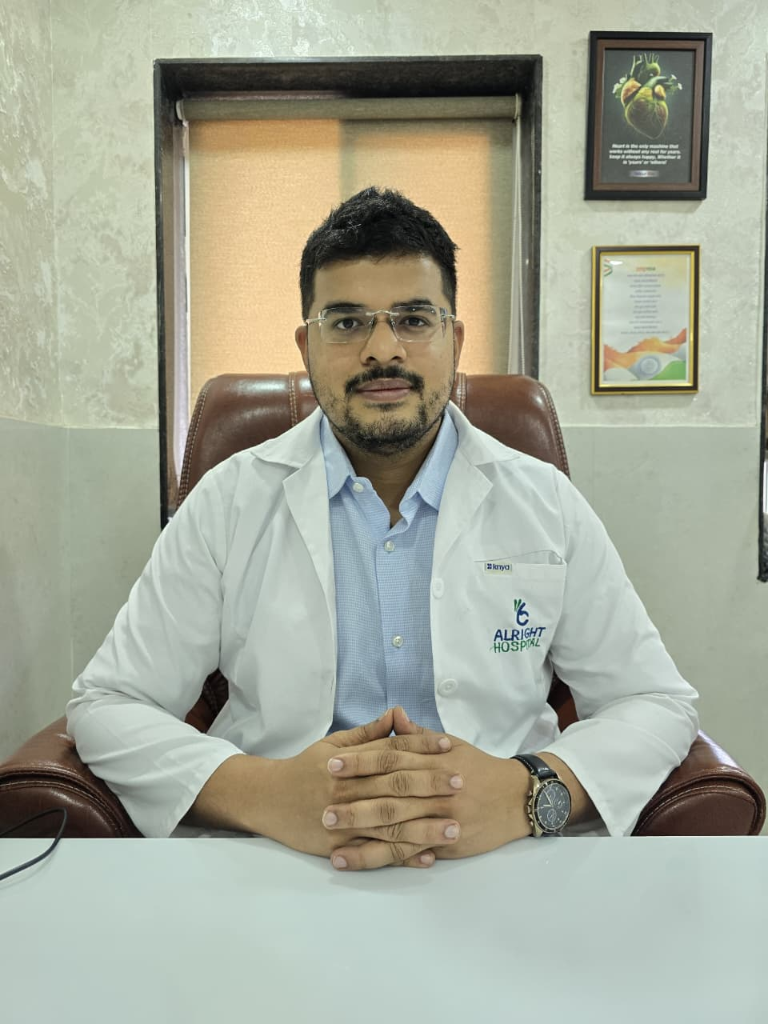
Dr. Vrushab Vinay Rode
Dr. Vrushab Vinay Rode is a Gold Medalist neurosurgeon at Alright Hospital, Nagpur, specializing in complex cranial neurosurgery, neurotrauma, spine surgery, and emergency neurocritical care. He is dedicated to raising clinical awareness for central nervous system infections and life-saving neurosurgical care across Central India.