
Medical emergencies don’t wait—and neither should you. Whether it’s a heart attack, stroke, severe accident, or sudden breathing difficulty, receiving immediate medical attention can make the difference between recovery and a life-threatening situation. A true emergency hospital is built to provide rapid diagnosis, expert care, and life-saving treatment around the clock.
If you’re searching for the best emergency hospital in Nagpur, it’s important to understand what distinguishes a fully equipped emergency centre from a regular hospital or clinic.
TL;DR
- A true emergency hospital provides 24×7 emergency medical care.
- Emergency centres have ICUs, trauma care, operation theatres, and advanced diagnostics available at all times.
- Clinics and non-emergency hospitals are designed for routine medical consultations and cannot manage critical emergencies.
- Early treatment during the “golden hour” significantly improves survival in emergencies.
- Alright Hospital offers comprehensive emergency services with experienced specialists and modern critical care facilities.
What Is an Emergency Hospital?
An emergency hospital is a healthcare facility designed to treat patients with serious or life-threatening medical conditions that require immediate attention. Unlike regular outpatient clinics, emergency hospitals operate 24 hours a day, 7 days a week, with doctors, nurses, diagnostic services, and critical care teams always available.
From severe injuries to sudden chest pain or stroke symptoms, emergency hospitals are prepared to respond without delay.
Emergency Hospital vs Non-Emergency Hospital or Clinic
Many people assume every hospital can handle emergencies. In reality, there is a significant difference.
A true emergency centre has dedicated emergency physicians, intensive care units, emergency operating theatres, and advanced imaging available at all times. A clinic or non-emergency hospital generally focuses on scheduled consultations, routine treatments, and planned procedures.
For example, a patient with high blood pressure may visit a clinic for regular follow-up. However, if that patient suddenly develops severe chest pain, difficulty breathing, or loses consciousness, immediate treatment at an emergency hospital is essential.
When Should You Visit an Emergency Hospital?
Knowing when to seek emergency care can save valuable time.
Visit an emergency hospital immediately if you experience:
- Severe chest pain or pressure
- Sudden weakness or paralysis on one side of the body
- Difficulty breathing
- Heavy bleeding that won’t stop
- Road traffic accidents or major injuries
- Head injuries with loss of consciousness
- Severe burns
- Poisoning
- Snake or animal bites
- High fever with confusion or seizures
- Sudden vision loss
- Persistent unconsciousness
Ignoring these symptoms or waiting for a clinic to open can delay life-saving treatment.
Why Every Minute Matters
Doctors often refer to the “Golden Hour”—the first hour after a serious injury or medical emergency. During this time, rapid diagnosis and treatment can significantly improve outcomes.
For example:
- A heart attack patient benefits from immediate cardiac treatment to restore blood flow.
- Stroke patients require urgent evaluation because certain treatments are effective only within a limited time window.
- Trauma patients need rapid bleeding control and emergency surgery if necessary.
This is why choosing a hospital with a dedicated emergency department is so important.
Services You Should Expect from a True Emergency Centre
A well-equipped emergency hospital should provide:
- 24×7 emergency doctors
- Fully equipped ICU and critical care units
- Trauma and accident care
- Emergency surgery facilities
- Advanced imaging such as X-ray, CT scan, and ultrasound
- Laboratory services available around the clock
- Ventilator support
- Emergency ambulance services
- Specialist consultations when required
These services work together to ensure patients receive timely and appropriate treatment without unnecessary delays.
What Happens When You Arrive at an Emergency Hospital?
When you arrive at a dedicated emergency department, the medical team follows a structured process.
First, trained staff quickly assess your condition through triage, which helps prioritise patients based on the severity of their illness or injury.
Next, doctors perform an examination and order any necessary investigations such as blood tests, ECG, X-rays, or CT scans. Once a diagnosis is made, treatment begins immediately. Depending on the condition, patients may be discharged, admitted for observation, transferred to the ICU, or prepared for emergency surgery.
This organised approach ensures that critically ill patients receive urgent care as quickly as possible.
Why Patients Choose Alright Hospital for Emergency Care in Nagpur
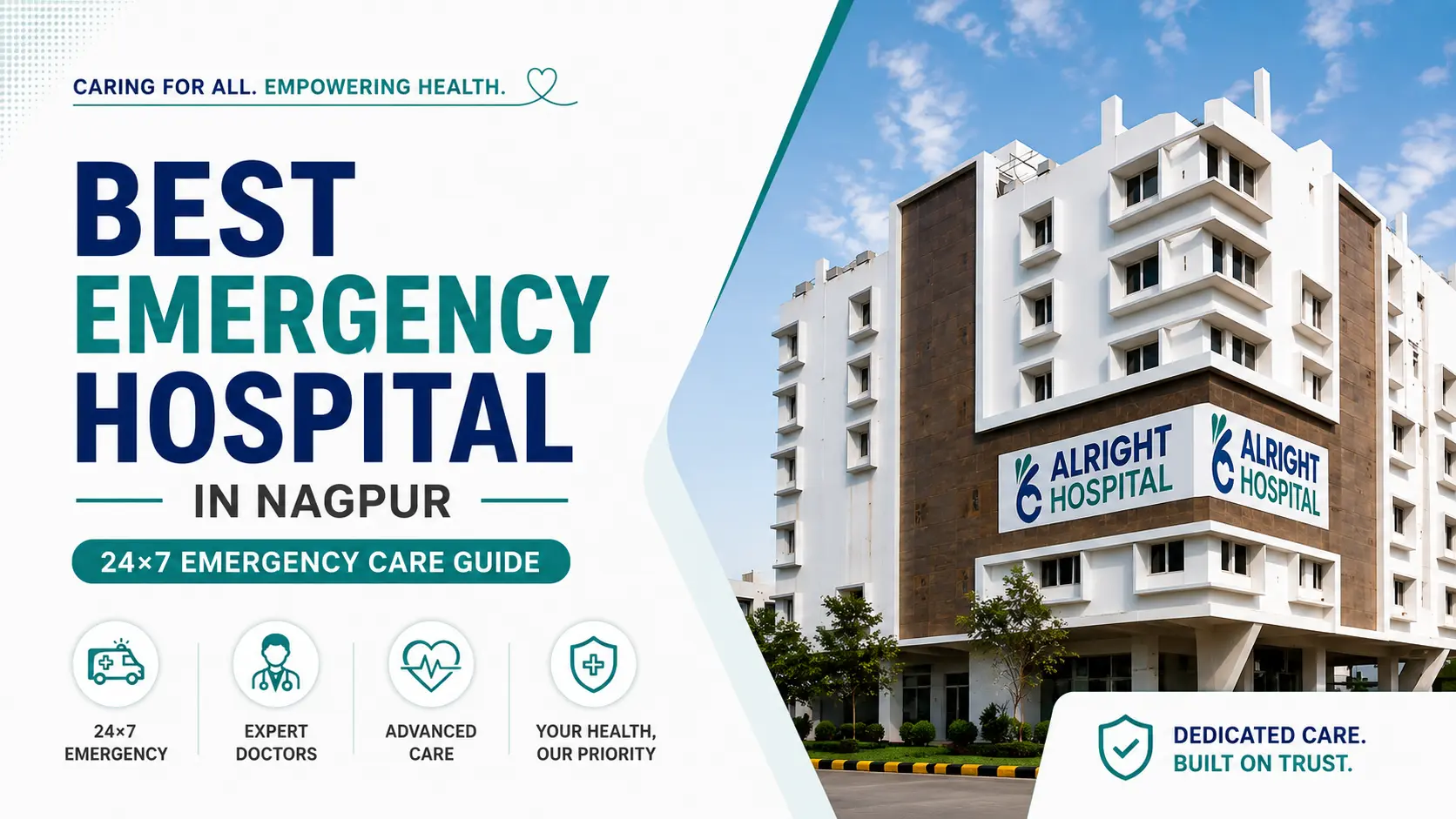
At Alright Hospital, emergency care is available 24 hours a day, 365 days a year. The hospital is equipped to manage a wide range of medical and surgical emergencies with experienced healthcare professionals and modern medical technology.
Patients benefit from:
- 24×7 emergency medical services
- Experienced emergency physicians
- Advanced diagnostic facilities
- Critical care and ICU support
- Trauma management
- Emergency surgical care
- Coordinated multidisciplinary treatment
- Patient-focused care from arrival to recovery
The goal is simple: provide fast, reliable, and compassionate care when every second matters.
A Real-Life Scenario
Imagine a 58-year-old man who suddenly develops severe chest pain while having dinner with his family. Instead of waiting until morning or visiting a nearby clinic, his family takes him directly to an emergency hospital.
Within minutes, he undergoes an ECG, blood tests, and evaluation by the emergency physician. Treatment begins immediately, reducing damage to the heart and significantly improving his recovery.
This is why recognising an emergency and reaching the right hospital quickly can make a life-changing difference.
How to Prepare for a Medical Emergency
While emergencies are unpredictable, a little preparation can help.
Keep these essentials ready:
- Emergency contact numbers
- Medical insurance details
- Current medication list
- Previous medical records if available
- Identification documents
Knowing the location of the nearest emergency hospital before an emergency occurs can also save valuable time.
Final Thoughts
Medical emergencies are unpredictable, but choosing the right hospital before an emergency occurs can make all the difference. A true emergency hospital offers far more than basic medical treatment—it provides rapid diagnosis, experienced emergency specialists, advanced critical care, and life-saving support whenever it’s needed.
If you or a loved one experiences a serious medical emergency, don’t delay treatment. Seek immediate care at a hospital equipped to manage critical situations with speed, expertise, and compassion.
Alright Hospital, Nagpur is committed to delivering 24×7 emergency care, advanced medical support, and patient-centred treatment when every minute counts.
Medical Disclaimer
This article is intended for educational purposes only and should not be considered a substitute for professional medical advice, diagnosis, or treatment. If you are experiencing a medical emergency, seek immediate medical attention or visit the nearest emergency department without delay.