

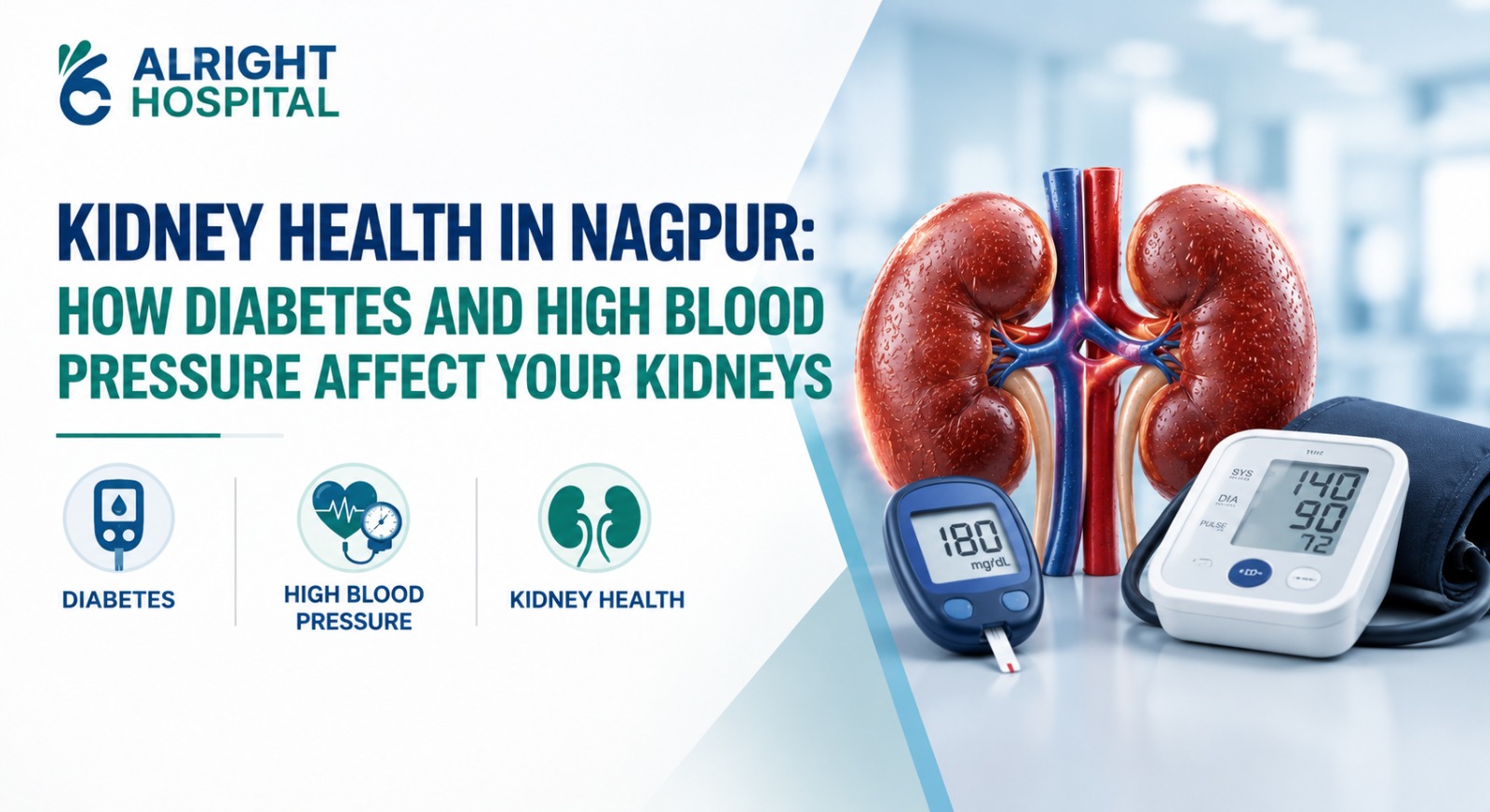
Ask anyone in Nagpur about their health and you’ll often hear the same two words: sugar and BP. Almost every family has someone dealing with one or both. What people rarely talk about is the quiet damage these conditions can do to the kidneys.
Kidney problems rarely announce themselves. By the time most people notice something is wrong, a lot of damage has already happened. So let’s understand how diabetes and high blood pressure affect your kidneys, and what you can do about it.
What Do Your Kidneys Actually Do?
Your kidneys are two small, bean-shaped organs, each about the size of your fist. They filter waste and extra water from your blood, balance salts and minerals, help control blood pressure, and support red blood cell production.
Each kidney contains about a million tiny filters called nephrons. Once they are damaged, they usually don’t grow back. That’s why prevention matters so much.
How Diabetes Damages Your Kidneys
When blood sugar stays high for years, it harms the delicate blood vessels inside the kidneys. The filters start to leak, and protein, mainly albumin, escapes into the urine. Over time, the kidneys lose their ability to clean the blood properly.
This condition is called diabetic kidney disease (diabetic nephropathy), and it is one of the leading causes of kidney failure in India. People who have had diabetes for 5 to 10 years or more, or whose sugar is poorly controlled, are at higher risk.
How High Blood Pressure Harms Your Kidneys
High blood pressure puts constant strain on the blood vessels throughout your body, including those in the kidneys. Over the years, the vessels narrow and stiffen, and the kidneys receive less blood. Damaged kidneys then struggle to regulate blood pressure, which pushes it even higher.
It becomes a vicious cycle. High BP damages the kidneys, and weak kidneys raise BP further. When diabetes and high BP occur together, which is very common, the risk multiplies.
Why Nagpur Residents Should Pay Extra Attention
Our lifestyle plays a big role. Many people in and around Nagpur face the same challenges:
- Diets heavy in fried food, spicy snacks, and sweets
- Extra salt from pickles, papad, and packaged foods
- Long working hours with very little exercise
- Heavy summers, when many people drink too little water
- Regular use of painkillers without a doctor’s advice
Add a family history of diabetes or hypertension, and the risk goes up even more. This is why regular screening matters, especially after the age of 35 to 40.
Warning Signs You Shouldn’t Ignore
Early kidney disease often has no symptoms at all. As it progresses, you may notice:
- Swelling in the feet, ankles, or around the eyes
- Foamy or bubbly urine
- Feeling tired or weak all the time
- Reduced appetite or nausea
- Frequent urination at night
- Itching, especially without a rash
- Blood pressure that is hard to control
- Shortness of breath
If you have diabetes or high BP and notice any of these, don’t wait. Consult a nephrologist in Nagpur as soon as possible.
Simple Tests That Can Save Your Kidneys
Kidney screening is simple and affordable. Ask your doctor about:
- Serum creatinine and eGFR: Shows how well your kidneys are filtering.
- Urine albumin test (ACR): Detects protein leakage early.
- Blood pressure monitoring: Best done regularly at home as well.
- HbA1c: Shows your average sugar control over three months.
If you have diabetes or hypertension, get these tests done at least once a year. Most diagnostic labs and hospitals in Nagpur offer them.
Practical Ways to Protect Your Kidneys
The good news is that you can slow down or even prevent kidney damage with consistent habits:
- Keep your sugar in range: Take your medicines on time and follow your doctor’s targets.
- Control your blood pressure: For most people with diabetes, a reading below 130/80 is the usual goal, but your doctor will guide you.
- Cut down on salt: Reduce pickles, papad, chips, and instant noodles.
- Stay hydrated: Drink enough water through the day, especially in Nagpur’s hot summers, unless your doctor has restricted your fluids.
- Avoid painkiller overuse: Frequent use of NSAIDs like diclofenac or ibuprofen can harm the kidneys. Don’t take them regularly without medical advice.
- Move daily: A 30-minute walk, yoga, or cycling helps control both sugar and BP.
- Quit smoking and limit alcohol: Both speed up kidney damage.
When to See a Kidney Specialist in Nagpur
Don’t wait for symptoms. You should see a kidney specialist if you have diabetes or high BP for several years, protein in your urine, a rising creatinine level, swelling, or a family history of kidney disease. Early treatment can slow the damage and may help you avoid dialysis. For people who do reach advanced stages, dialysis centres and transplant services are available in Nagpur, so you don’t have to travel far for care.
Final Thoughts
Diabetes and high blood pressure don’t have to mean kidney failure. Most kidney problems are preventable or manageable if caught early. A yearly check-up, a healthier plate, regular exercise, and taking your medicines on time can protect your kidneys for decades.
If you live in Nagpur and haven’t had your kidneys checked recently, make this the week you do it. Your kidneys work quietly for you every single day. Take care of them.