
Alright Hospital

nagpur hot temperature

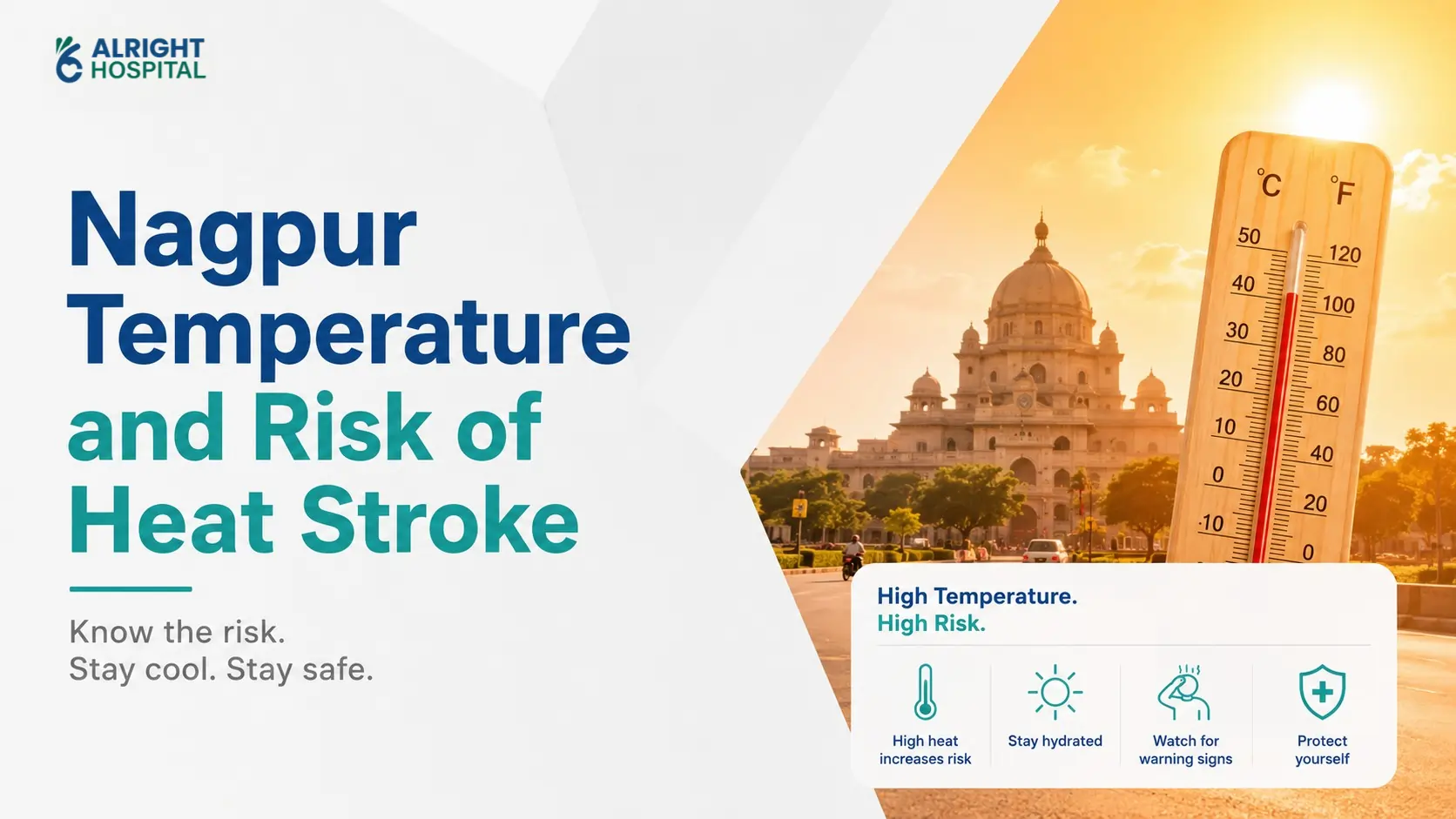
Nagpur Temperature and the Rising Risk of Heat Stroke: What You Need to Know

Every summer, residents of Nagpur experience intense heat that can make daily life exhausting. Temperatures often rise above 45°C, especially during peak summer months, increasing the risk of dehydration, heat exhaustion, and heat stroke.

While many people consider extreme heat a normal part of Nagpur’s climate, prolonged exposure to high temperatures can become a serious medical emergency if warning signs are ignored.

At Alright Hospital, doctors frequently see patients affected by heat-related illnesses during summer. Understanding the symptoms, risks, and prevention methods can help protect you and your family from dangerous complications.

Why Nagpur Summers Can Be Dangerous

Nagpur is known for its dry and extremely hot summers. During heat waves, temperatures can remain very high throughout the day, sometimes even late into the evening.

High temperatures combined with:

  • Dehydration
  • Outdoor work
  • Poor ventilation
  • Lack of fluid intake
  • Direct sun exposure

can put significant stress on the body.

The human body naturally cools itself through sweating. However, during extreme heat, this cooling system may fail, causing body temperature to rise dangerously.

This can lead to heat exhaustion or heat stroke.

What Is Heat Stroke?

Heat stroke is a serious medical emergency that occurs when the body temperature rises above normal levels and the body cannot cool itself effectively.

It usually develops after prolonged exposure to high temperatures or intense physical activity in hot weather.

Without immediate treatment, heat stroke can damage:

  • Brain
  • Heart
  • Kidneys
  • Muscles

In severe cases, it can become life-threatening.

Difference Between Heat Exhaustion and Heat Stroke

Many people confuse heat exhaustion with heat stroke.

Heat Exhaustion

This is an early stage of heat-related illness.

Common symptoms include:

  • Heavy sweating
  • Weakness
  • Dizziness
  • Headache
  • Muscle cramps
  • Nausea
  • Excessive thirst

Heat Stroke

This is more dangerous and requires urgent medical care.

Symptoms may include:

  • Very high body temperature
  • Confusion
  • Difficulty speaking
  • Rapid heartbeat
  • Dry or hot skin
  • Fainting
  • Seizures
  • Loss of consciousness

If someone develops these symptoms during extreme heat, immediate medical attention is necessary.

Who Is Most at Risk During Nagpur Heat?

Some people are more vulnerable to heat stroke than others.

High-Risk Groups Include:

  • Elderly individuals
  • Infants and young children
  • Outdoor workers
  • Athletes
  • Pregnant women
  • People with heart disease
  • Patients with diabetes
  • Individuals with high blood pressure
  • People taking certain medications

People who travel frequently in direct sunlight or spend long hours outdoors are also at higher risk.

Common Causes of Heat Stroke

Heat stroke often develops due to a combination of factors.

Common Triggers:

  • Staying outdoors during peak afternoon heat
  • Not drinking enough water
  • Wearing tight or dark clothing
  • Excessive physical activity in hot weather
  • Poor ventilation indoors
  • Alcohol consumption during hot weather
  • Long exposure to closed vehicles without cooling

Even healthy individuals can develop heat stroke under extreme conditions.

Early Warning Signs You Should Never Ignore

Recognizing symptoms early can prevent complications.

Warning Signs:

  • Persistent headache
  • Extreme tiredness
  • Dizziness
  • Excessive sweating
  • Sudden weakness
  • Muscle cramps
  • Nausea
  • Fast pulse
  • Difficulty concentrating

If symptoms worsen or confusion develops, seek emergency medical help immediately.

What To Do If Someone Has Heat Stroke

Heat stroke is an emergency. Quick action can save lives.

Immediate Steps:

  1. Move the person to a cool or shaded area
  2. Loosen tight clothing
  3. Use cool water on the body
  4. Place cold cloths or ice packs on the neck and underarms
  5. Give fluids only if the person is conscious
  6. Call emergency medical services immediately

Do not ignore confusion, unconsciousness, or seizures.


How To Protect Yourself During Nagpur Summers

Simple precautions can greatly reduce the risk of heat-related illness.

Important Prevention Tips

Stay Hydrated

Drink water regularly even if you do not feel thirsty.

Avoid Peak Heat Hours

Try to avoid outdoor exposure between 12 PM and 4 PM.

Wear Light Clothing

Loose, breathable, and light-colored clothes help the body stay cooler.

Avoid Heavy Meals in Extreme Heat

Very spicy or oily meals may increase discomfort during hot weather.

Keep Indoor Spaces Ventilated

Use fans, coolers, or air conditioning when possible.

Never Leave Children Inside Vehicles

Even a few minutes inside a parked vehicle can become dangerous.

Limit Outdoor Exercise During Peak Heat

Exercise early morning or after sunset when temperatures are lower.

Can Heat Stroke Affect the Heart and Brain?

Yes.

Extreme heat can place stress on multiple organs, especially in older adults and patients with pre-existing medical conditions.

Heat stroke may lead to:

  • Low blood pressure
  • Irregular heartbeat
  • Kidney injury
  • Brain swelling
  • Breathing difficulty

This is why timely treatment is critical.

When Should You Visit a Hospital?

Visit a hospital immediately if someone experiences:

  • Confusion
  • Fainting
  • Persistent vomiting
  • Difficulty breathing
  • Seizures
  • Very high fever during hot weather
  • Severe dehydration

Delaying treatment can increase the risk of serious complications.

Why Summer Health Awareness Matters in Nagpur

Every year, heat waves affect thousands of people across India. Cities like Nagpur are particularly vulnerable due to prolonged high temperatures.

Many cases of heat-related illness can be prevented through:

  • Public awareness
  • Early symptom recognition
  • Proper hydration
  • Timely medical care

Taking heat seriously is important for protecting your health during summer months.

Final Thoughts

Extreme summer temperatures in Nagpur are more than just uncomfortable. They can become dangerous if proper precautions are not taken.

Heat stroke is preventable in many cases, but awareness and quick action are essential.

Stay hydrated, avoid excessive sun exposure, and pay attention to warning signs during hot weather.

At Alright Hospital, our medical team is committed to helping patients stay safe during extreme summer conditions with timely diagnosis, emergency care, and preventive health guidance.

Read More