

Monsoon Health Checkup Package – Stay Protected This Rainy Season
The monsoon brings relief from Nagpur's summer heat, but it also brings waterlogging, humidity, and the perfect breeding ground for...
Dr. Irshad Pathan
April 15, 2026
Every week in my clinic, I meet patients who waited. They felt something unusual in their chest, or an odd heaviness in their arm, or a shortness of breath that did not make sense given what they were doing. And they waited. They told themselves it was probably gas, or stress, or just tiredness. Sometimes they were right. But sometimes, what they dismissed was their heart sending them the clearest warning it could.
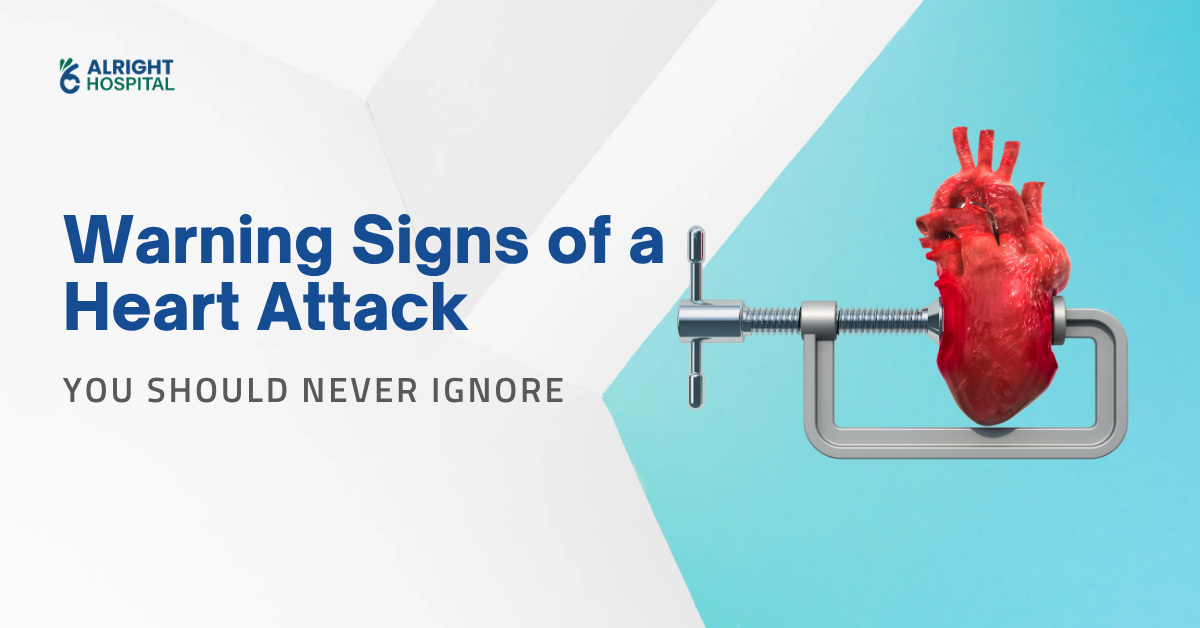
A heart attack is not always the dramatic, clutch-the-chest-and-fall event you see in films. In real life, the signs are often quieter, more ambiguous, and far easier to explain away. That is exactly what makes them dangerous. This article is my attempt to describe what a heart attack actually feels like, who is most at risk, and what you should do the moment something feels wrong.
Let me start with the most well-known symptom because it is still the most common one. Most people having a heart attack experience some form of chest discomfort. But the word “pain” is often misleading. Many of my patients describe it not as sharp pain but as a pressure, a tightness, a squeezing sensation, or a feeling that something heavy is sitting on their chest. Some say it feels like a band tightening around the upper body.
This discomfort typically lasts more than a few minutes. It may come and go, or it may persist. If you feel this kind of sustained pressure or heaviness in the center or left side of your chest, especially if it is accompanied by any of the other symptoms I describe below, please do not wait to see if it passes on its own.
One pattern I want to highlight specifically is angina, which is chest discomfort that typically appears during physical exertion or emotional stress and goes away with rest. If you have been experiencing angina and it suddenly becomes more frequent, more intense, or starts occurring at rest, that is a serious escalation. In cardiology we call this unstable angina, and it requires immediate evaluation because it often precedes a heart attack.
One of the things that confuses people most is that heart attack discomfort does not always stay in the chest. It can radiate, meaning it travels from the chest to other parts of the body. The most common patterns I see are pain spreading to the left arm, particularly the inner part of the left arm, pain moving up into the jaw or the back of the neck, and a deep aching sensation in the upper back between the shoulder blades.
I have had patients who came in complaining of jaw pain or a toothache that turned out to be cardiac in origin. I have had others who thought they had pulled a muscle in their back. When pain in these areas appears suddenly, without an obvious physical cause, and especially when combined with any chest tightness or shortness of breath, the heart must be considered.
Feeling breathless when you are running or climbing stairs is normal. Feeling breathless when you are sitting still, lying down, or doing something as gentle as walking from one room to another is not. Unexplained breathlessness, particularly when it comes on suddenly or accompanies even the mildest exertion, is one of the symptoms people most commonly attribute to something else, whether that is age, weight, or anxiety.
Sometimes breathlessness is the only symptom a person experiences during a heart attack, particularly in older adults and in women. The heart’s reduced ability to pump blood effectively means the lungs can start to feel the strain before the chest pain has a chance to announce itself clearly.
These three symptoms together are a combination I take very seriously. A sudden cold sweat without physical activity or heat is a recognised warning sign. Nausea, which people often dismiss as indigestion or a stomach problem, can be the body’s response to reduced blood flow. And a feeling of unusual dizziness or lightheadedness, especially when combined with chest discomfort, suggests that the heart may not be circulating blood adequately to the brain.
I want to be specific about nausea and indigestion because this is an area where many heart attacks in Nagpur go unrecognised for too long. The upper abdomen and the heart share some of the same nerve pathways. This means cardiac events can genuinely feel like acidity, a burning in the chest, or a heaviness after a meal. If you regularly treat yourself for acidity but notice the sensation is different this time, or it does not respond to antacids, or it is accompanied by sweating or arm pain, please do not assume it is the same old gastric issue.
This is perhaps the most underappreciated warning sign, especially among women. In the days or even weeks before a heart attack, many patients report feeling an unusual, crushing tiredness that is different from ordinary fatigue. They describe it as exhaustion that does not improve with rest, a heaviness in the body that they cannot account for given their activities. For women in particular, this kind of fatigue, sometimes accompanied by sleep disturbance and a vague sense that something is wrong, can be the primary warning before a cardiac event.
I am not suggesting that every episode of tiredness is cardiac. But when fatigue is new, severe, and unexplained, especially in someone with risk factors like diabetes, hypertension, or a family history of heart disease, it deserves a proper evaluation rather than being accepted as inevitable ageing.
This one is harder to name but I hear it often enough to take it seriously. Patients describe an overwhelming sense of dread or doom, a feeling that something very bad is about to happen, even without being able to identify a specific physical symptom. This is sometimes called a feeling of impending doom in medical literature, and while it sounds vague, it reflects real physiological distress. The body knows something is wrong before the mind has processed the details.
If you or someone near you expresses this feeling alongside any other symptom I have described, that combination should be treated as an emergency.
In my practice, the patients who arrive after a heart attack are not always the ones you might expect. Yes, older men with known heart disease are in the high-risk group. But increasingly I see heart attacks in people in their thirties and forties, in women who were told for years that heart disease is a man’s problem, and in people with poorly controlled diabetes who did not experience the chest pain that might have brought them in sooner.
In the Nagpur population, the risk factors I see most frequently are uncontrolled type 2 diabetes, high blood pressure that has been managed inconsistently, high LDL cholesterol, smoking, and a family history of cardiac events. Stress related to work and financial pressures is also a genuine contributing factor that does not get enough attention.
If you have two or more of these risk factors, a baseline cardiac evaluation is not optional. It is something I strongly recommend doing before a crisis makes it urgent.
Time is muscle. Every minute that passes during a heart attack, more heart muscle is being damaged by the lack of blood flow. The faster a blocked artery is opened, whether through medication or a procedure like angioplasty, the more of the heart can be saved. This is not a situation where you should drive yourself to a clinic, wait and see, or try a home remedy.
If you or someone near you is experiencing chest pressure or pain, breathlessness, radiating arm or jaw pain, cold sweating, or any combination of the above, the right action is to call for emergency help immediately and get to the nearest hospital with cardiac care facilities. Do not eat or drink anything while waiting. If the person is conscious and not allergic, a 325 mg aspirin tablet chewed immediately can help limit clot formation while transport is arranged, but only if you are confident the symptoms are cardiac in nature.
At Alright Hospital, our cardiac team is equipped to handle emergency cardiac care at both the Jafar Nagar and Lashkaribagh branches. Our catheterization lab allows us to perform emergency angioplasty when needed to restore blood flow as quickly as possible.
I have spent years trying to help patients understand that the heart rarely fails without warning. The warning signs are there, but they ask us to pay attention, to take them seriously, and to act without delay. Please do not let embarrassment, a busy schedule, or a hope that it will pass on its own cost you something irreversible.
If you have concerns about your heart health, or if you have experienced any of the symptoms described in this article even briefly, I encourage you to book a consultation. A simple ECG and a conversation can be the difference between catching something early and facing an emergency. Your heart has been working for you every single moment of your life. Let us make sure you give it the attention it deserves.
Dr. Irshad Pathan Cardiologist, Alright Hospital Jafar Nagar and Lashkaribagh, Nagpur
The monsoon brings relief from Nagpur's summer heat, but it also brings waterlogging, humidity, and the perfect breeding ground for...
Heart attacks in men under 45 are rising across Nagpur and Vidarbha. Learn why young cardiac events are increasing, how...
Same symptom, very different condition. A Nagpur nephrologist explains how to tell kidney stones apart from chronic kidney disease.