

Easy Heart-Healthy Diet for Nagpur Families
Home Team Alright Hospital March 7, 2026 Easy Heart-Healthy Diet for Nagpur Families (Simple Indian Foods)Keeping your heart healthy does...
mohadshahbaz96
March 27, 2026
Most people only start thinking seriously about their heart after something goes wrong. A sudden chest pain during the evening walk, an uncle who collapsed at a family gathering, a routine ECG that came back with something unexpected on it. For many families across India, heart blockage enters the conversation this way — suddenly and with a lot of fear attached to it.
This article is an attempt to explain what heart blockage actually is, how it progresses, and when a procedure like angioplasty becomes necessary. The goal is not to replace a conversation with your cardiologist but to make sure you walk into that conversation already knowing what questions to ask.
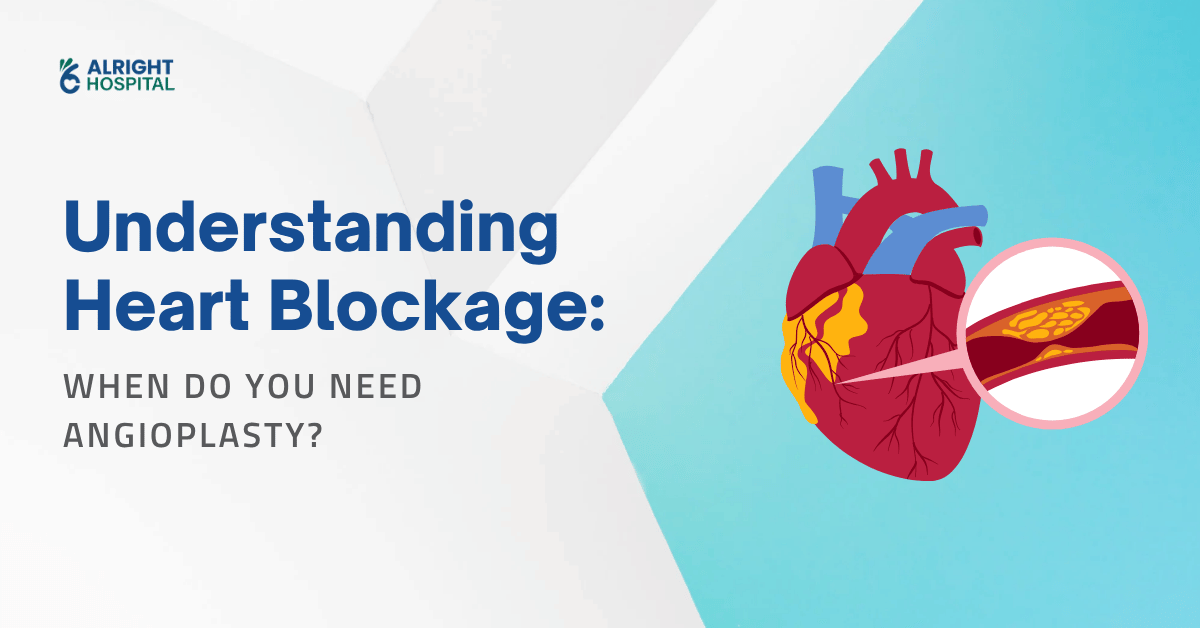
The heart needs a continuous supply of blood to keep beating. This blood is delivered through a network of vessels called coronary arteries. Over time, for reasons that include poor diet, high cholesterol, smoking, diabetes, stress, and genetics, the inner walls of these arteries can start to accumulate a waxy substance called plaque. The medical term for this buildup is atherosclerosis.
As plaque builds up, the artery becomes narrower. Less blood can pass through. The heart muscle, which depends on that blood for oxygen, starts to struggle. This narrowing is what most people mean when they talk about heart blockage.
In the early stages, you may not feel anything at all. The body compensates quietly. But as the blockage grows, symptoms begin to appear, and at a certain point, the situation becomes medically serious.
The most common symptom is chest pain or discomfort, typically felt as a tightening, heaviness, or pressure in the chest. This is called angina, and it usually shows up during physical activity or emotional stress and goes away with rest. Some people describe it as feeling like someone is sitting on their chest. Others notice it more as pain spreading into the left arm, the jaw, or the upper back.
Shortness of breath during activities that previously felt easy is another warning sign. So is unusual fatigue, especially in women, who often experience heart disease symptoms differently from men. Dizziness, nausea, and sweating without an obvious cause are also worth taking seriously.
Not every person with a significant blockage will feel dramatic symptoms. Some people have what is called a silent heart attack — the blockage was severe enough to cause damage but the symptoms were mild enough to be dismissed as indigestion or exhaustion. This is one reason why regular cardiac checkups matter, especially after the age of forty or earlier if you have risk factors like diabetes, hypertension, or a family history of heart disease.
When a doctor suspects a blockage, they will typically start with an ECG, which records the electrical activity of the heart and can reveal signs of stress or damage. A stress test, also called a treadmill test or TMT, measures how the heart performs under physical exertion. Blood tests that check cholesterol levels, blood sugar, and markers like troponin help complete the picture.
If these tests raise concern, the next step is usually an angiography, also called a coronary angiogram. This is a procedure where a thin tube called a catheter is guided through a blood vessel — typically in the wrist or groin — to the coronary arteries. A contrast dye is injected and X-ray images are taken that show exactly where blockages are located and how severe they are.
Angiography is the clearest way to see what is happening inside the arteries and it is what cardiologists use to decide on the right course of treatment.
Not every blockage requires angioplasty. The decision depends on how severe the blockage is, how many arteries are affected, what symptoms the patient is experiencing, and whether the heart muscle is already showing signs of damage.
For mild to moderate blockages, especially those below fifty percent, doctors often choose to manage the condition with medications and lifestyle changes. Statins to control cholesterol, blood thinners, blood pressure medication, and strict dietary changes can stabilize and in some cases even partially reverse early-stage blockages without any intervention.
Angioplasty becomes necessary when the blockage is severe enough to significantly restrict blood flow, when symptoms like chest pain are not responding to medication, or when there is evidence that part of the heart muscle is not getting enough blood. It is also performed urgently during a heart attack when a coronary artery is completely or nearly completely blocked and every minute without intervention risks permanent damage to the heart.
Angioplasty, more formally called percutaneous coronary intervention or PCI, is a procedure designed to open up a blocked artery and restore blood flow to the heart. It is not open-heart surgery. It is done through a small puncture in the skin, usually at the wrist or groin, and most patients are awake throughout the procedure under local anesthesia.
A thin, flexible tube called a catheter is passed through the blood vessel to reach the blocked coronary artery. At the tip of this catheter is a tiny deflated balloon. When the balloon is positioned inside the blockage, it is inflated briefly to compress the plaque against the artery walls, widening the passage.
In the vast majority of cases, a stent is placed at the same time. A stent is a small mesh tube, usually made of metal and coated with medication to prevent the artery from closing again. It stays permanently in place, acting as a scaffold that keeps the artery open. The balloon is then deflated and removed, and the stent remains.
The whole procedure typically takes thirty minutes to an hour for a single blockage. Patients are usually observed for a day and then discharged.
When there are multiple severe blockages, especially in certain critical arteries, or when the blockages are too complex for a stent to handle effectively, bypass surgery may be recommended instead of angioplasty. Bypass surgery creates alternative routes for blood to travel around the blocked arteries using vessels taken from other parts of the body.
Bypass surgery is a more involved procedure with a longer recovery time, but for certain patients — particularly those with blockages in the left main coronary artery or with three-vessel disease alongside weakened heart function — it often offers better long-term outcomes than stenting.
The choice between angioplasty and bypass surgery is not one-size-fits-all. It is made by a team of cardiologists and cardiac surgeons after evaluating the angiogram results, the patient’s overall health, age, kidney function, and several other factors. The patient’s own preferences and circumstances also matter in this decision.
The procedure opens the artery but it does not address the underlying condition that caused the blockage. This is the part that patients sometimes miss. After angioplasty, medications like dual antiplatelet therapy are prescribed for a period that your cardiologist will determine, and these are not optional — stopping them early significantly increases the risk of a clot forming inside the stent.
Beyond medications, the lifestyle changes that should have happened earlier now become non-negotiable. Quitting smoking if you smoke, controlling blood sugar and blood pressure, eating a diet low in saturated fat and sodium, getting regular moderate exercise, managing stress — these are what determine whether the treated artery stays open and whether other arteries remain healthy. Angioplasty buys time and relieves symptoms, but long-term heart health requires consistent daily effort.
Follow-up appointments with the cardiologist are important, especially in the first year after the procedure, to monitor how the heart is responding and to adjust medications if needed.
Cardiac emergencies require fast access to experienced care, and the time between a heart attack starting and a blocked artery being opened is directly linked to how much heart muscle is saved. Knowing in advance which hospital near you has a catheterization lab and a trained interventional cardiology team can make a genuine difference in an emergency. Alright Hospital, with branches in Jafar Nagar and Lashkaribagh, offers cardiac diagnostic and interventional services for patients across Nagpur.
If you or a family member has been experiencing chest discomfort, unusual breathlessness, or has risk factors like diabetes, high blood pressure, or a family history of heart disease, a cardiac evaluation is worth scheduling before a crisis makes it urgent.
Heart blockage is serious but it is also one of the most treatable conditions in modern medicine when caught and managed at the right time. The combination of good diagnostics, appropriate intervention when genuinely needed, and a committed effort toward lifestyle change gives most patients with coronary artery disease a chance at a healthy and active life. The conversation with your cardiologist is the place to start.
Home Team Alright Hospital March 7, 2026 Easy Heart-Healthy Diet for Nagpur Families (Simple Indian Foods)Keeping your heart healthy does...
Intermittent Fasting: Transforming Weight Loss and Heart Health Irshad Pathan September 24, 2025 Blog Facebook Twitter LinkedIn What is Open...
Learn about World Thrombosis Day 2025, blood clot prevention, and expert thrombosis care at Alright Hospital Nagpur with Dr. Irshad...