When Should You See a Kidney Doctor? 7 Warning Signs of CKD
Home Team Alright May 11, 2026 When Should You See a Kidney Doctor? 7 Warning Signs of CKD Let me...
Dr. Irshad Pathan
May 13, 2026
Heart tests can feel confusing, especially when you look at an ECG report filled with numbers, graphs, and medical terms. Many people leave the clinic with one big question:
“Is my ECG normal?”
At Alright Hospital, we often meet patients who feel anxious after seeing terms like heart rate, PR interval, QT interval, or sinus rhythm on their report. The good news is that understanding the basics of an ECG is easier than it looks.
This guide explains ECG reports in simple language so you can better understand what your doctor is checking and what those numbers actually mean.
An ECG, also called an Electrocardiogram, is a simple test that records the electrical activity of your heart.
Every heartbeat is controlled by electrical signals. An ECG machine captures these signals and displays them as waves on paper or a screen. Doctors use this information to evaluate how your heart is functioning.
An ECG can help detect:
Irregular heartbeat
Heart attack
Reduced blood flow to the heart
Enlarged heart chambers
Effects of high blood pressure
Certain electrolyte imbalances
The test is painless, quick, and usually takes only a few minutes.
Your doctor may suggest an ECG if you have symptoms such as:
It is also commonly done before surgery, during routine health checkups, or for people with diabetes and heart disease risk factors.
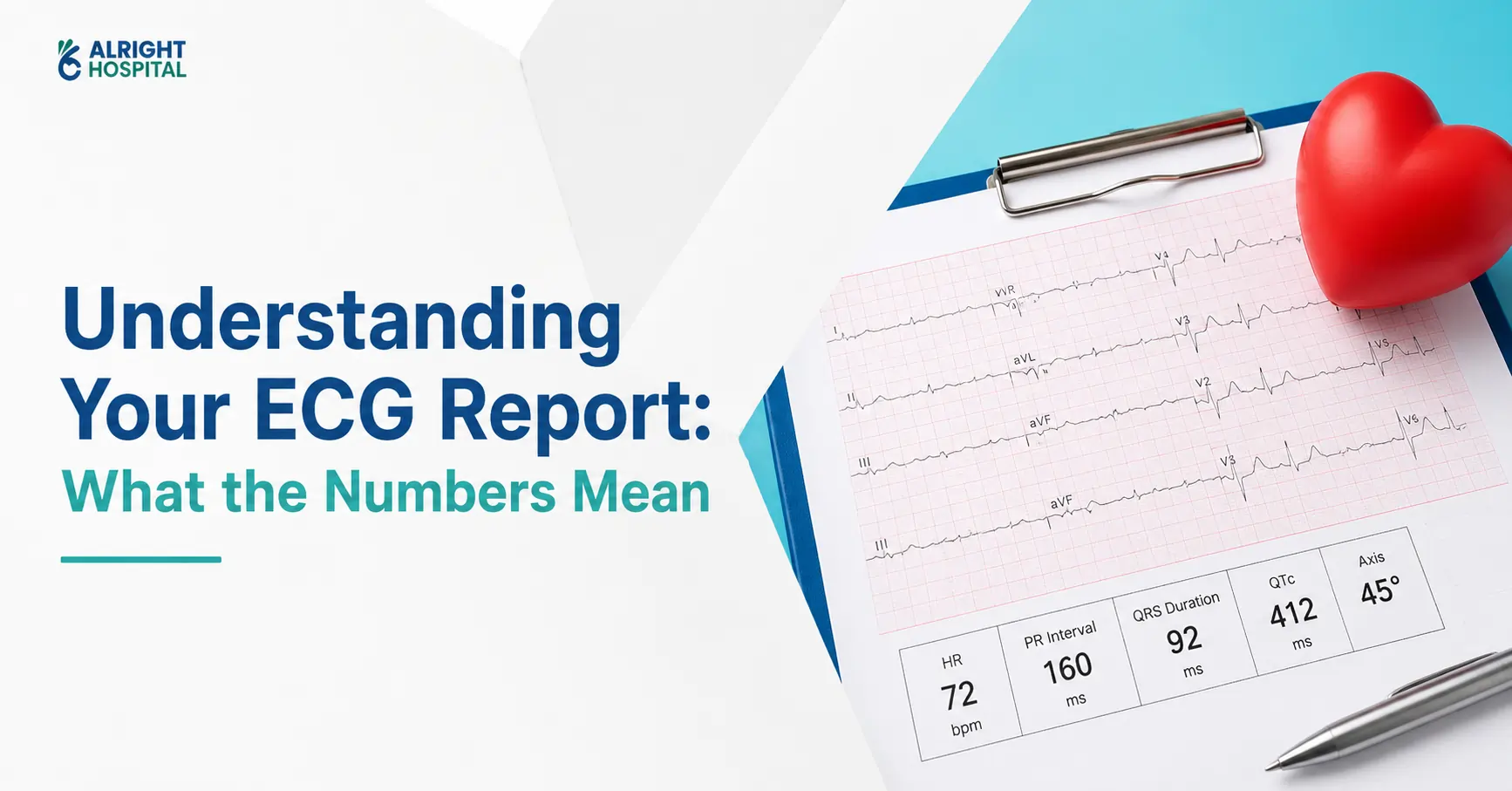
An ECG report contains several measurements. Here are the most common ones explained in simple terms.
This tells how many times your heart beats in one minute.
A fast heart rate is called tachycardia.
A slow heart rate is called bradycardia.
Your doctor interprets the number based on your age, symptoms, fitness level, and overall health.
This describes whether your heartbeat is regular or irregular.
This means your heart’s natural pacemaker is working properly.
Not every irregular rhythm is dangerous, but some may require further evaluation.
The P wave represents electrical activity in the upper chambers of the heart, called the atria.
Doctors check:
Abnormal P waves may suggest enlargement of the atria or rhythm disorders.
The PR interval measures how long electrical signals take to travel from the upper chambers to the lower chambers of the heart.
A PR interval that is too long or too short may indicate a problem in the heart’s electrical conduction system.
This is one of the largest spikes seen on the ECG.
It represents the electrical activity that causes the lower chambers of the heart to contract and pump blood.
A widened QRS complex may indicate:
The QT interval reflects the time your heart muscles take to contract and recover.
Doctors pay close attention to this number because a prolonged QT interval can increase the risk of dangerous heart rhythms.
Some causes include:
The ST segment is an important part of the ECG when doctors suspect a heart attack.
Changes in the ST segment may indicate:
However, mild changes do not always mean a serious problem. Interpretation depends on symptoms and clinical examination.
Many people panic when they read the term borderline ECG on their report.
In most cases, it simply means there are small variations that may or may not be clinically significant.
A borderline ECG does not automatically mean you have heart disease.
Doctors interpret ECG findings along with:
No.
An ECG is extremely useful, but it does not detect every heart condition.
Sometimes a person may have a normal ECG and still require additional tests such as:
That is why self-diagnosis based only on the ECG report is not recommended.
Not all ECG changes indicate heart disease. Temporary factors can also affect the results, including:
This is why doctors always interpret ECGs in the context of the patient’s overall health.
Seek urgent medical attention if you experience:
These symptoms should never be ignored, even if an earlier ECG was normal.
Simple lifestyle habits can significantly improve heart health:
Early detection plays a major role in preventing serious cardiac problems.
An ECG report may look technical, but understanding the basics can reduce anxiety and help you have better discussions with your doctor.
Remember:
If you have chest discomfort, palpitations, or concerns about your heart health, consult a qualified medical professional for proper evaluation.
At Alright Hospital, our team is committed to providing accurate diagnosis, compassionate care, and advanced cardiac evaluation to help patients make informed decisions about their health.

Home Team Alright May 11, 2026 When Should You See a Kidney Doctor? 7 Warning Signs of CKD Let me...
Home Team Alright May 8, 2026 Top 5 Hospitals in Nagpur Choosing the right hospital in Nagpur is one of...
Home Team Alright May 7, 2026 Nagpur Temperature and the Rising Risk of Heat Stroke: What You Need to Know...