
Understanding Your ECG Report: What the Numbers Mean
Home Team Alright May 13, 2026 Understanding Your ECG Report: What the Numbers Mean Heart tests can feel confusing, especially...
Read More →
Irshad Pathan
December 4, 2025
Open heart surgery is a broad term that refers to any surgical procedure where a surgeon makes a large incision in the chest to access the heart directly. The term “open” means the chest is opened by cutting through the breastbone (sternum) to reach the heart.
During open heart surgery, the surgical team may temporarily stop your heart and use a heart-lung machine (cardiopulmonary bypass) to circulate blood and oxygen throughout your body while the surgeon works on your heart. Once the repair is complete, the heart is restarted, and the chest is closed with sutures.
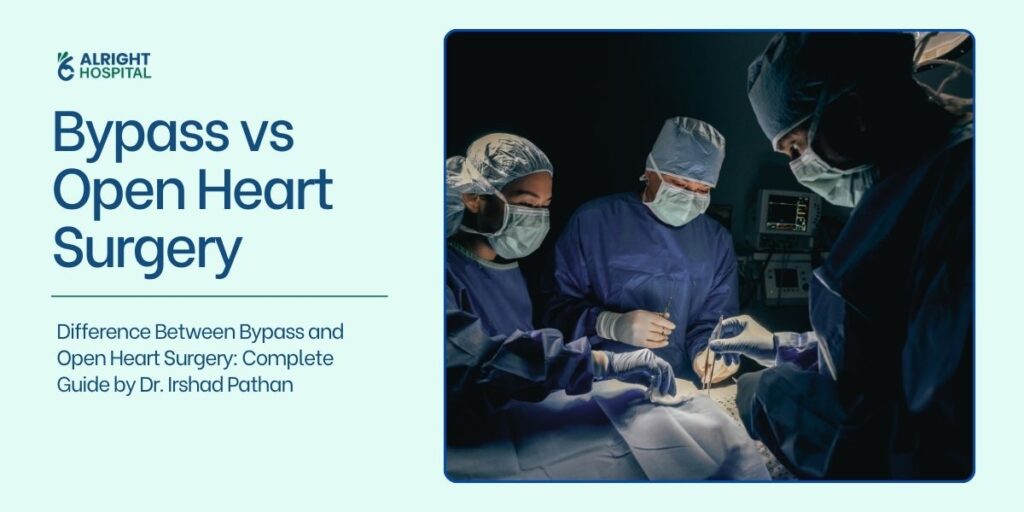
The difference between bypass and open heart surgery becomes clearer when you understand that open heart surgery is the umbrella category, while bypass surgery is one specific type within that category.
Bypass surgery, medically known as Coronary Artery Bypass Grafting or CABG, is a specific type of open heart surgery performed to treat blocked coronary arteries. When plaque builds up in your coronary arteries (the vessels that supply blood to your heart muscle), blood flow becomes restricted, leading to chest pain (angina) or heart attacks.
During CABG, the surgeon takes a healthy blood vessel from another part of your body, usually from your leg (saphenous vein), chest (internal mammary artery), or arm (radial artery) and uses it to create a new pathway for blood flow. This new vessel “bypasses” the blocked section of the coronary artery, allowing oxygen-rich blood to reach the heart muscle beyond the blockage.
Traditional CABG: Uses a heart-lung machine while the heart is stopped
Off-pump CABG (OPCAB): Performed on a beating heart without the heart-lung machine
Minimally invasive bypass surgery: Uses smaller incisions and sometimes robotic assistance
At Alright Hospital, Dr. Irshad Pathan and his team utilize advanced technology including the state-of-the-art Philips FD 10 Cath Lab to provide precise cardiac diagnosis and determine the best treatment approach for each patient.
Understanding the difference between bypass and open heart surgery helps clarify your treatment options:
| Category | Open Heart Surgery | Bypass Surgery (CABG) |
|---|---|---|
| Purpose & Scope |
Broad category covering multiple major cardiac procedures Corrects structural heart issues like valves and congenital defects Can include coronary artery bypass as one component |
Specific surgery focused only on coronary artery disease Performed to bypass blocked or narrowed arteries Restores blood supply to the heart muscle |
| Conditions Treated |
Heart valve stenosis & regurgitation Congenital heart defects (ASD, VSD, PDA) Heart tumors, arrhythmias Coronary artery disease (includes bypass procedure) |
Coronary artery disease Multiple blockages in coronary arteries Severe angina not responding to medicines Left main coronary artery disease |
| Procedure Complexity |
May involve valve repair/replacement Can combine multiple cardiac repairs Longer surgery time for complex procedures May use mechanical or biological valves |
Creates new pathways for blood flow using grafts Depends on number of blockages (single/double/triple/quadruple bypass) Typically 3–6 hours Uses patient’s veins or arteries as grafts |
| Recovery Timeline |
Hospital stay: 5–7 days ICU: 1–3 days Full recovery: 8–12 weeks or more Cardiac rehabilitation recommended |
Hospital stay: 5–7 days ICU: 1–2 days Return to routine: 6–8 weeks Most resume normal life in 2–3 months Cardiac rehab essential |
Heart Valve Disease: When valves are severely damaged and cannot function properly, causing symptoms like chest pain, breathlessness, or heart failure
Congenital Heart Defects: Structural abnormalities present from birth requiring correction
Severe Aortic Disease: Aneurysms or dissections requiring repair
Complex Heart Conditions: Multiple issues requiring comprehensive surgical intervention
Severe Coronary Artery Disease: Significant blockages in major coronary arteries (typically >70% blockage)
Left Main Coronary Artery Disease: Critical blockages in the main vessel supplying the left side of the heart
Multi-vessel Disease with Diabetes: Patients with diabetes and multiple blocked arteries benefit more from CABG than angioplasty
Failed Angioplasty: When stenting procedures haven’t successfully treated blockages
Angina Unresponsive to Medication: Persistent chest pain despite optimal medical therapy
Dr. Irshad Pathan at Alright Hospital provides comprehensive cardiac evaluation using advanced diagnostic tools including angiography, stress tests, and echocardiography to determine the most appropriate treatment for each patient.
Both open heart surgery and bypass surgery carry surgical risks, though modern techniques and expertise have significantly improved safety.
| Category | Details |
|---|---|
| Common Risks |
Infection at the incision site (2–4% cases) Bleeding requiring blood transfusion Stroke (1.4–3.8% in bypass surgery) Heart attack during or after surgery Irregular heart rhythms (Atrial fibrillation in 30% of CABG patients) Blood clots Kidney problems (4.5–6.4%) Reactions to anesthesia |
| Factors That Increase Risk |
Age above 70 years Diabetes Previous heart attack Poor kidney or liver function Chronic lung disease Obesity Emergency surgery vs planned surgery |
The cost of heart surgery varies based on procedure complexity, hospital infrastructure, and surgeon expertise.
Approximate Costs in Nagpur:
Open Heart Surgery: ₹1,75,000 to ₹3,25,000
Bypass Surgery (CABG): ₹1,80,000 to ₹3,60,000
Heart Valve Replacement: ₹2,40,000 to ₹5,70,000
Minimally Invasive Procedures: ₹2,25,000 to ₹4,25,000
These costs typically include surgery, hospital stay, medications, and basic post-operative care. Alright Hospital offers transparent pricing and works with major insurance providers to make quality cardiac care accessible to patients across Nagpur.
Regardless of whether you undergo bypass surgery or another type of open heart surgery, lifestyle modifications are crucial for long-term success:
Follow a Heart-Healthy Diet: Emphasize fruits, vegetables, whole grains, lean proteins, and healthy fats while limiting sodium, saturated fats, and processed foods
Exercise Regularly: Participate in cardiac rehabilitation and gradually increase physical activity as recommended by your cardiologist
Take Medications as Prescribed: Aspirin, statins, beta-blockers, and other medications help prevent future cardiac events
Quit Smoking Completely: Smoking significantly increases risk of graft failure and future heart problems
Manage Chronic Conditions: Control blood pressure, diabetes, and cholesterol levels through medication and lifestyle changes
Reduce Stress: Practice relaxation techniques, adequate sleep, and stress management strategies
Attend Follow-up Appointments: Regular monitoring ensures early detection of any complications
Don’t wait for a medical emergency. Visit Alright Hospital if you experience any of these warning signs:
Chest pain or pressure, especially during physical activity or stress
Shortness of breath that’s new, worsening, or occurs at rest
Unusual fatigue or decreased exercise tolerance
Palpitations or irregular heartbeat
Dizziness or fainting spells
Swelling in ankles, feet, or abdomen
Pain radiating to jaw, neck, arms, or back
Early evaluation by an experienced cardiologist like Dr. Irshad Pathan can prevent complications and improve outcomes. With over 15 years of interventional cardiology experience and training from prestigious KEM Mumbai, Dr. Pathan offers expert diagnosis and personalized treatment plans.
As one of the best heart hospitals in Nagpur, Alright Hospital offers several advantages that ensure patient safety, comfort, and the highest standards of cardiac care.
Understanding the difference between bypass and open heart surgery empowers you to have meaningful conversations with your cardiologist and make informed decisions about your cardiac care. While bypass surgery specifically addresses blocked coronary arteries, it falls under the broader category of open heart surgery, which encompasses various procedures to treat different heart conditions.
At Alright Hospital, Nagpur, we combine cutting-edge technology with compassionate care to provide world-class cardiac treatment. Whether you need bypass surgery, valve replacement, or diagnostic services like angiography, our team led by Dr. Irshad Pathan is committed to your heart health and recovery.
If you or your loved one experiences chest pain, breathlessness, or other cardiac symptoms, don’t delay. Visit Alright Hospital, Nagpur, for expert cardiac evaluation and 24×7 emergency care. Early intervention can save lives and prevent serious complications.
No, bypass surgery (CABG) is a specific type of open heart surgery that treats blocked coronary arteries. Open heart surgery is a broader term that includes bypass surgery, valve replacement, repair of congenital defects, and other cardiac procedures.
Both procedures have excellent safety records when performed by experienced surgeons. Bypass surgery typically has a mortality rate of 1-2%, while valve replacement ranges from 1.5-2.5%. Your individual risk depends on your age, overall health, and specific cardiac condition. Dr. Pathan evaluates each patient’s unique situation to recommend the safest approach.
Most patients spend 5-7 days in the hospital after bypass surgery, with 1-2 days in the ICU. Full recovery typically takes 6-8 weeks, though some patients may need up to 12 weeks. Cardiac rehabilitation accelerates recovery and improves long-term outcomes.
Angioplasty with stenting is an excellent option for many patients with coronary artery disease. However, bypass surgery is preferred for patients with diabetes, multiple vessel blockages, left main coronary disease, or complex lesions where angioplasty has failed. Dr. Pathan uses advanced diagnostic tools at Alright Hospital’s Philips FD 10 Cath Lab to determine the best treatment approach.
Most health insurance policies cover medically necessary cardiac surgeries including bypass and valve procedures. Coverage varies by policy, so check with your insurance provider. Alright Hospital works with major insurance companies to facilitate claims and ensure you receive the care you need.
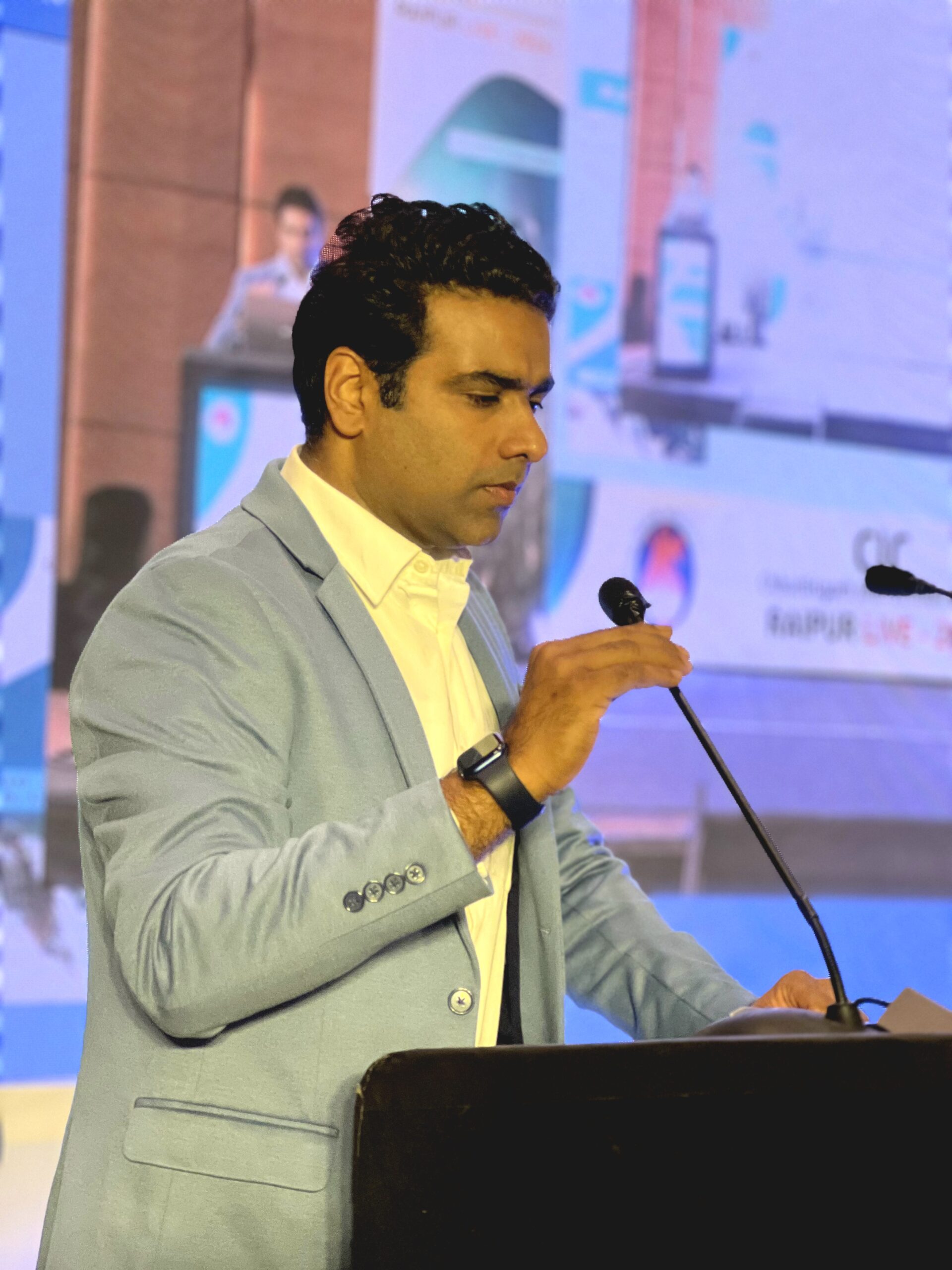
Dr. Irshad Pathan is widely recognized as the Best Cardiologist in Nagpur, known for his exceptional skills in interventional cardiology and deep commitment to patient-centered care. With over 15 years of experience and thousands of successful procedures to his credit, Dr. Pathan continues to transform lives by offering cutting-edge cardiac treatments with honesty, precision, and compassion.